
✨ This article was AI edited. Editorial responsibility: EcologyWay.info.
Produced with AI. This article was artificially generated. Editorial responsibility: EcologyWay.info.
The five importance of instrumentation and measurement in renewable energy are: (1) accurate bankable resource assessment, (2) real-time operational efficiency and power optimization, (3) grid synchronization and power quality compliance, (4) condition monitoring and predictive maintenance, and (5) structural safety interlocks and automated curtailment protection. Precision sensors, telemetry transducers, and SCADA monitoring systems ensure multi-megawatt solar, wind, and storage assets operate safely and cost-effectively.
The global transition to renewable energy involves replacing centralized, predictable fossil fuel generation with variable, weather-dependent resources such as solar photovoltaic (PV) radiation, wind kinetic energy, and electrochemical storage. Because weather phenomena fluctuate second by second, modern clean energy systems cannot function without high-precision measurement instrumentation. From ground-mounted LiDAR systems probing upper wind shears to sub-millisecond digital oscilloscopes monitoring grid harmonics, instrumentation forms the foundational nervous system of clean power infrastructure.
1. Bankable Resource Assessment and Pre-Construction Feasibility
Before any capital is deployed to construct a utility-scale wind farm or solar facility, developers must prove to institutional financiers that the natural resource can generate sufficient revenue to service debt obligations. This phase, known as bankability verification, depends entirely on rigorous instrumentation:
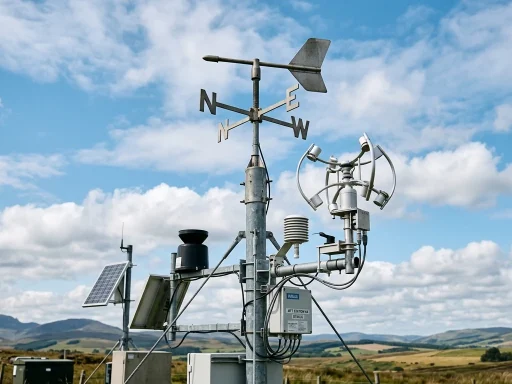
- Wind Resource Measurement: Met towers equipped with calibrated Class 1 cup anemometers, wind vanes, barometric sensors, and ground-based Doppler LiDAR (Light Detection and Ranging) scan wind vectors up to 250 meters altitude. These instruments record mean wind speeds, wind shear exponents, and turbulence intensity according to IEC 61400-12 standards.
- Solar Irradiance Measurement: High-precision thermopile pyranometers (ISO 9060 Class A) measure Global Horizontal Irradiance (GHI) and Diffuse Horizontal Irradiance (DHI). Pyrheliometers mounted on dual-axis sun trackers record Direct Normal Irradiance (DNI), establishing exact P50 and P90 annual generation forecasts.
A measurement uncertainty of merely 1% in wind speed measurement translates to an approximate 2% to 3% error in projected energy yield, potentially causing a multimillion-dollar project valuation deficit.
2. Real-Time Operational Efficiency and Dynamic Optimization
Once operational, clean energy facilities must maximize the conversion of ambient energy into grid-compliant electricity across changing environmental conditions:
- Maximum Power Point Tracking (MPPT): In solar PV arrays, irradiance and temperature sensors continuously feed ambient parameters into central inverter digital signal processors (DSPs). High-speed current and voltage transducers track the nonlinear I-V curves of solar strings, adjusting inverter impedance in milliseconds to maintain peak power output.
- Active Pitch and Yaw Control: On utility wind turbines, ultrasonic 3D anemometers mounted atop nacelles measure horizontal and vertical wind vectors. Programmable logic controllers (PLCs) command electromechanical yaw drives to align rotors directly into the wind and adjust individual blade pitch angles to optimize aerodynamic lift-to-drag ratios.
3. Grid Synchronization and Power Quality Compliance
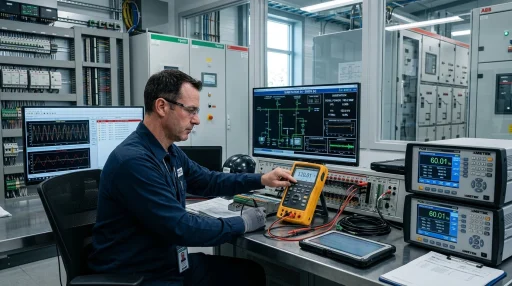
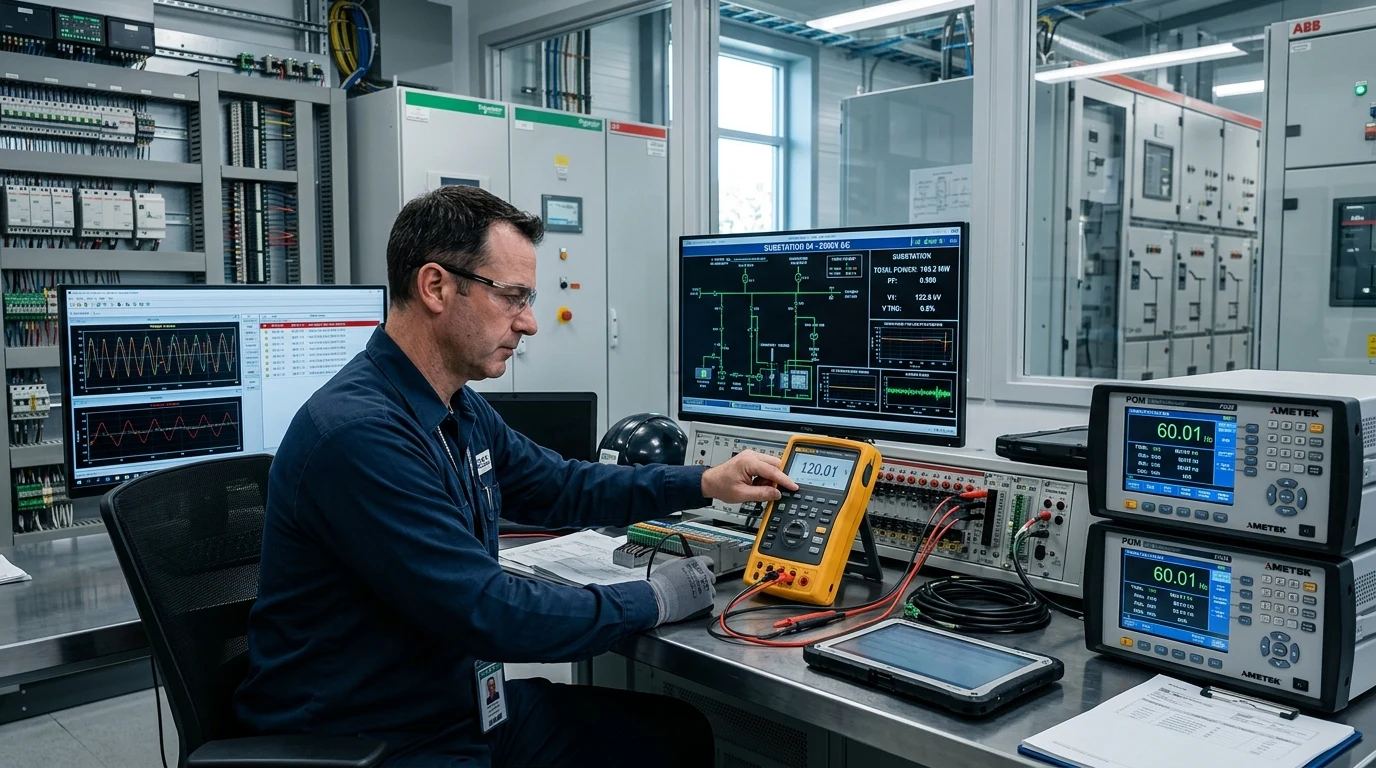
Interconnecting decentralized, inverter-based renewable generators into regional electrical transmission grids requires adherence to strict grid codes (such as IEEE 1547, IEC 61000-4-30, and ENTSO-E standards). Substation instrumentation plays a critical role in preserving grid stability:
- Phasor Measurement Units (PMUs): Synchronized via GPS satellites, PMUs measure electrical bus voltages, current phasors, and frequency 60 times per second, providing wide-area situational awareness to transmission system operators (TSOs).
- Power Quality Analyzers: Continuous instrumentation monitors Total Harmonic Distortion (THD), voltage sags, swells, flicker, and phase angle displacement caused by fast-switching power electronics (IGBTs and SiC MOSFETs).
- Fault Ride-Through (FRT) Verification: High-speed digital disturbance recorders capture transient electrical behavior during short-circuits, ensuring renewable plants remain connected and inject reactive power to support grid voltage recovery.
4. Condition Monitoring and Predictive Asset Maintenance
Unplanned downtime at offshore wind farms or remote desert solar installations generates severe operational costs and lost revenue. Specialized diagnostic instrumentation enables transition from reactive repairs to automated predictive maintenance (PdM):
| Renewable Asset | Target Component | Measurement Instrumentation | Failure Mode Detected |
|---|---|---|---|
| Wind Turbine | Main Bearings & Planetary Gearbox | Piezoelectric Accelerometers (Vibration CMS) | Bearing spalling, gear tooth micro-pitting, shaft misalignment |
| Wind Turbine | Lubrication Circuit | Inductive Oil Debris Sensors & Viscometers | Ferrous/non-ferrous particulate wear, oil viscosity breakdown |
| Solar Photovoltaic | PV Modules & Combiner Boxes | Infrared Thermographic Cameras & Hall Effect Sensors | Cell hotspots, bypass diode failure, localized shading |
| Battery Storage (BESS) | Lithium-Ion Battery Cells | Fiber-Optic Distributed Temperature Sensors (DTS) | Thermal runaway initiation, cell internal impedance rise |
Vibration monitoring systems (VMS) detect bearing surface degradation up to 6 months before catastrophic mechanical failure, allowing operators to plan repair vessels during calm weather windows and saving millions in replacement costs.
5. Environmental Compliance, Safety Interlocks, and Automated Protection
Renewable power plants operate in delicate outdoor ecosystems under rigorous environmental permitting covenants. Measurement instrumentation enforces regulatory limits and protects surrounding ecology:
- Bat and Avian Protection Systems: Automated radar systems and 360-degree stereoscopic optical cameras detect approaching raptors or migratory birds. Machine-vision algorithms track flight trajectories and trigger automated aerodynamic blade braking within seconds, curtailing the turbine until the airspace clears.
- Acoustic Shadow & Flicker Telemetry: Microphones installed at community boundary lines monitor low-frequency sound emissions. Shadow flicker sensors calculate solar azimuth and real-time cloud obscuration, pausing specific turbines when rotating blade shadows would sweep across residential windows.
- Storm and Extreme Load Safety Shutdowns: When ultrasonic anemometers record sustained winds exceeding 25 to 30 m/s (56 to 67 mph) or seismic sensors detect ground motion, safety PLCs trigger emergency pitch-to-feather sequences, disengage generator contacts, and set fail-safe hydraulic disk brakes.
The Strategic Value of Metrology in Clean Energy
Modern renewable energy systems demonstrate that sustainable generation is fundamentally an information science. By deploying accurate, calibrated measurement instrumentation across every stage—from initial prospecting through 25-year operational lifecycles—the clean energy sector achieves institutional bankability, maximizes thermodynamic harvest, and guarantees grid resilience for a decarbonized global economy.
Frequently Asked Questions
What are the five main reasons instrumentation is important in renewable energy?
The five primary reasons are: (1) Resource assessment and investment bankability, (2) Real-time efficiency and power tracking, (3) Grid synchronization and power quality, (4) Condition monitoring and predictive maintenance, and (5) Environmental compliance and emergency safety protection.
What instruments are used to measure wind for a wind farm?
Wind resource assessment utilizes Class 1 cup anemometers, 3D ultrasonic anemometers, wind direction vanes, barometric pressure and temperature sensors, and ground-based remote-sensing Doppler LiDAR or SoDAR systems that profile wind shear and turbulence up to 300 meters above ground level.
What does a pyranometer measure in a solar power plant?
A pyranometer measures broadband solar irradiance (flux density in Watts per square meter) received from a whole hemisphere (180-degree field of view). It is the primary reference instrument used to measure Global Horizontal Irradiance (GHI) and assess solar panel conversion efficiency.
How does instrumentation prevent equipment failure in renewable plants?
Continuous vibration sensors, thermographic cameras, and oil debris analyzers detect subtle physical changes—such as bearing wear, electrical hotspots, or lubrication contamination—long before catastrophic failure occurs, allowing maintenance teams to intervene proactively.
Get our latest guides, news, and insights highlighted in your Google Search & AI Overviews.